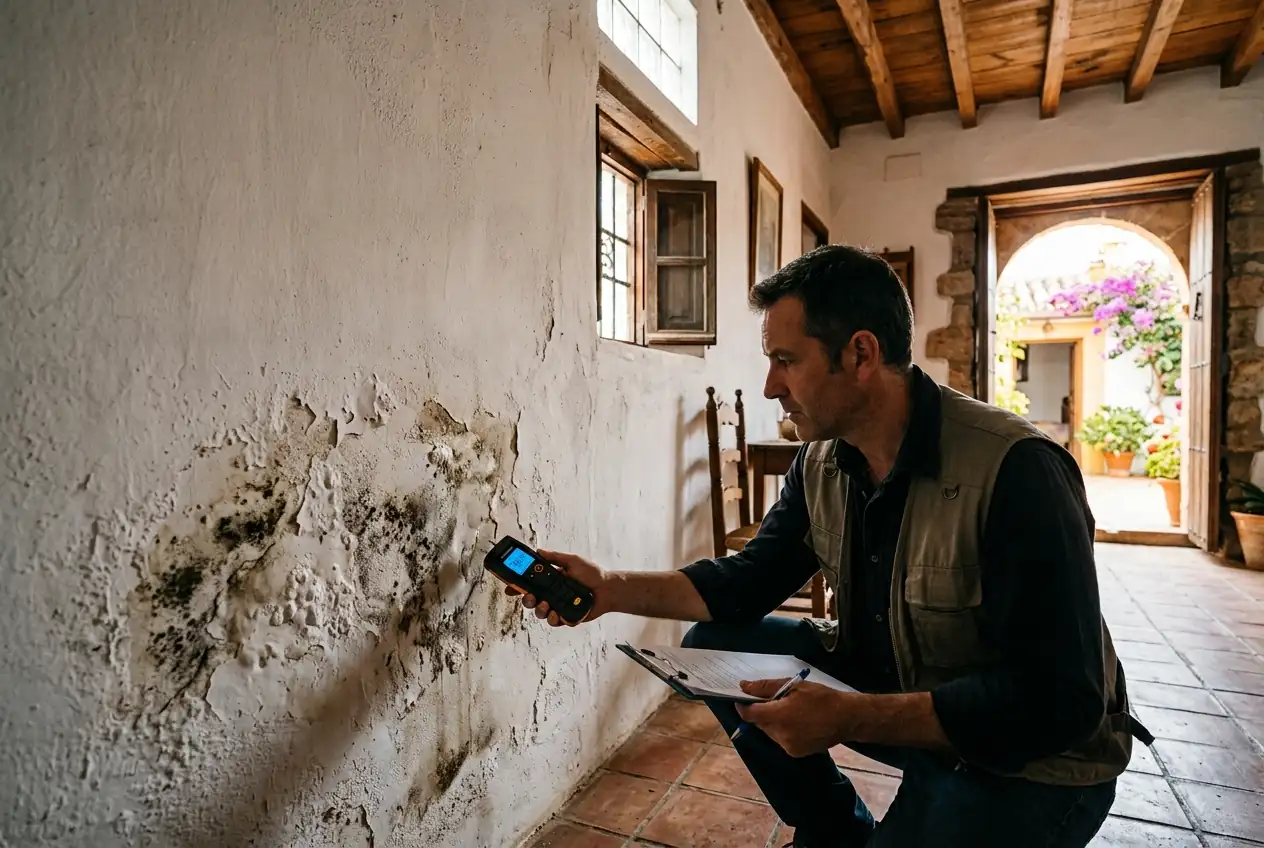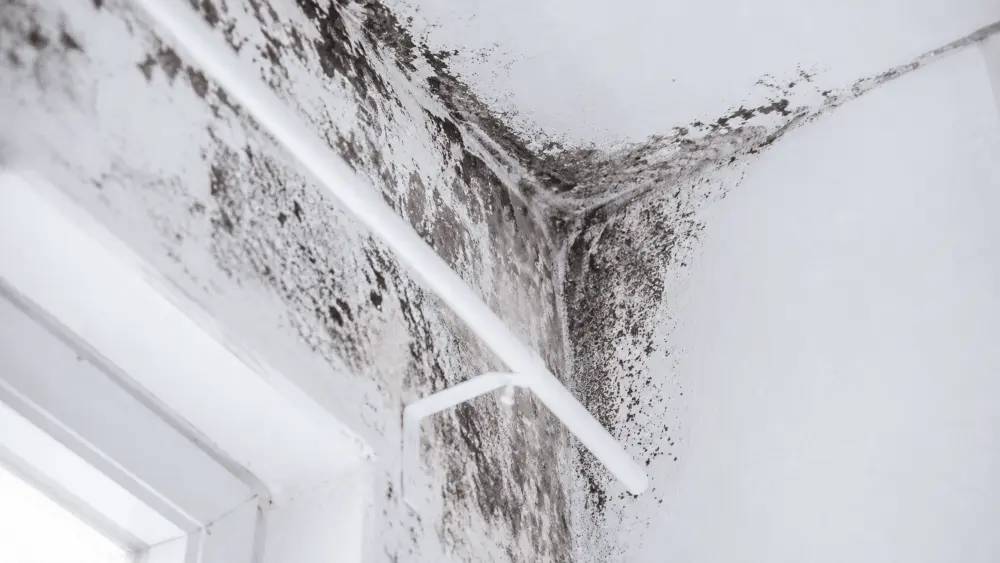
This inspection covers a flat in central Alicante city, where the bathroom showed persistent black mold along one ceiling corner and paint bubbling on the wall shared with the neighbouring unit. The extractor fan was operating normally during the visit, yet the musty odor remained noticeable. No leak was found under the sink, which pointed the inspection toward condensation and ventilation rather than a plumbing fault. Mold and damp wall issues like this are common in Alicante flats built before ventilation standards tightened, and the pattern here is worth walking through in detail.
Field Observations
Mold growth was concentrated in the upper corner of the bathroom, spreading across roughly 15cm in each direction from the ceiling junction. The affected surface felt cool relative to the rest of the wall, a sign consistent with a thermal bridge rather than a wet substrate underneath.
Paint on the party wall shared with the neighbouring flat had begun to bubble and lift in a band close to the same corner. The extractor fan drew air normally when tested, but the musty smell persisted through the full duration of the inspection.
A check under the sink and around the shower tray found no active leak or standing water.
What Inspectors Check For Damp Wall and Mold in a Flat Bathroom
- Mold pattern and location relative to corners, thermal bridges, and wet areas
- Surface temperature differential between the affected area and surrounding wall
- Extractor fan airflow and duct routing
- Plumbing connections under the sink, behind the toilet, and around the shower tray
- Condition of paint and plaster on party walls shared with neighbouring units
Why It Happens
Bathroom corners and party wall junctions are common cold spots in flats where the original construction has little or no cavity insulation, a detail typical of buildings from before 1979 that were never upgraded. Warm, humid air from showering condenses on these cooler surfaces, and repeated condensation over weeks eventually supports mold growth even where ventilation is technically functioning. An extractor fan that clears visible steam can still leave the room humid enough for mold to take hold if it is undersized for the room or if the duct run is long and restrictive. The paint bubbling on the shared wall suggests moisture is also migrating through the party wall itself, likely from the same condensation source rather than a separate one.
Why It Matters
Mold in a bathroom corner rarely threatens the building's structure, but persistent condensation gradually damages plaster and paint finishes, and left untreated, the moisture can affect the party wall on the neighbouring side as well. Airborne mold spores are also a recognised respiratory irritant, which makes this a habitability concern rather than a purely cosmetic one. Because the underlying cause is thermal and ventilation-related rather than a leak, cleaning the visible mold without addressing the cold spot usually brings the growth back within a season.
How Inspectors Evaluate It
A hygrometer reading establishes the room's typical humidity level, while a surface thermometer or thermal imaging camera confirms whether the affected area is genuinely colder than the surrounding wall. Inspectors test the extractor fan's actual airflow rather than relying on the switch working, since undersized or blocked ducting is a frequent finding. A mould swab can confirm the growth type where the extent or recurrence is unusual, though visual identification is normally sufficient for a standard bathroom case. Ruling out a plumbing leak, checked with a straightforward visual and moisture-meter survey around the sink, shower, and any buried pipework, is a necessary step before attributing the damp to condensation alone.
Equipment Used
- Hygrometer for room humidity readings
- Thermal imaging camera or surface thermometer for cold-spot mapping
- Airflow meter for extractor fan performance
- Non-invasive moisture meter around plumbing connections
Repair Options
- Improve extractor fan capacity and duct routing to shorten the drying time after showers
- Treat the affected area with a fungicidal wash, followed by anti-mould paint
- Insulate the thermal bridge at the corner where practical, to reduce future condensation
- Repair and repaint the party wall section once the moisture source is under control
- Install a humidity-triggered fan timer if the current unit lacks one
When Immediate Action Is Recommended
This case does not point to a structural or plumbing emergency, so there is no need for urgent intervention beyond normal scheduling. That said, treating the mold and improving ventilation before the next humid season is worth prioritising, since each additional cycle of condensation makes the affected plaster harder to fully dry and repair. If the paint bubbling on the party wall spreads beyond the current band, it is worth checking with the neighbouring unit whether a similar pattern is appearing on their side.
Maintenance Tips
- Run the extractor fan for at least 15-20 minutes after every shower
- Wipe down tiled and painted surfaces after use to reduce standing moisture
- Leave the bathroom door ajar when not in use to aid air circulation
- Check the extractor duct for lint or debris buildup once a year
- Re-treat any recurring mold spot promptly rather than repainting over it
Summary
The bathroom in this Alicante flat showed a straightforward condensation and mould pattern: a cold corner, an undersized or restricted extraction path, and moisture migrating into the shared party wall. No plumbing fault was found, which narrows the fix to ventilation and thermal improvements rather than pipework repair. Addressing the airflow and insulating the cold spot should resolve the recurrence, provided the party wall section is also dried out and repainted once the source is controlled.
Frequently Asked Questions
Is mold on a bathroom ceiling always caused by a leak?
Not necessarily. Condensation from everyday showering is a more common cause in flats with limited insulation or ventilation, and this case showed no evidence of a leak under the sink or shower tray.
Can running the extractor fan longer solve the problem on its own?
It often helps, but if the fan is undersized for the room or the duct run is restrictive, longer run times only partly offset the issue. Confirming actual airflow, not just that the fan switches on, is worth doing before relying on this fix alone.
Does mold on a shared party wall affect the neighbouring flat?
It can, particularly where paint bubbling suggests moisture is migrating through the wall. It is worth mentioning the finding to the neighbouring owner so both sides can be checked.
How urgent is a damp wall and mold repair in a flat bathroom?
It is not an emergency in most cases, but treating it before the next humid season limits how much plaster needs replacing and reduces the irritation from ongoing spore exposure.