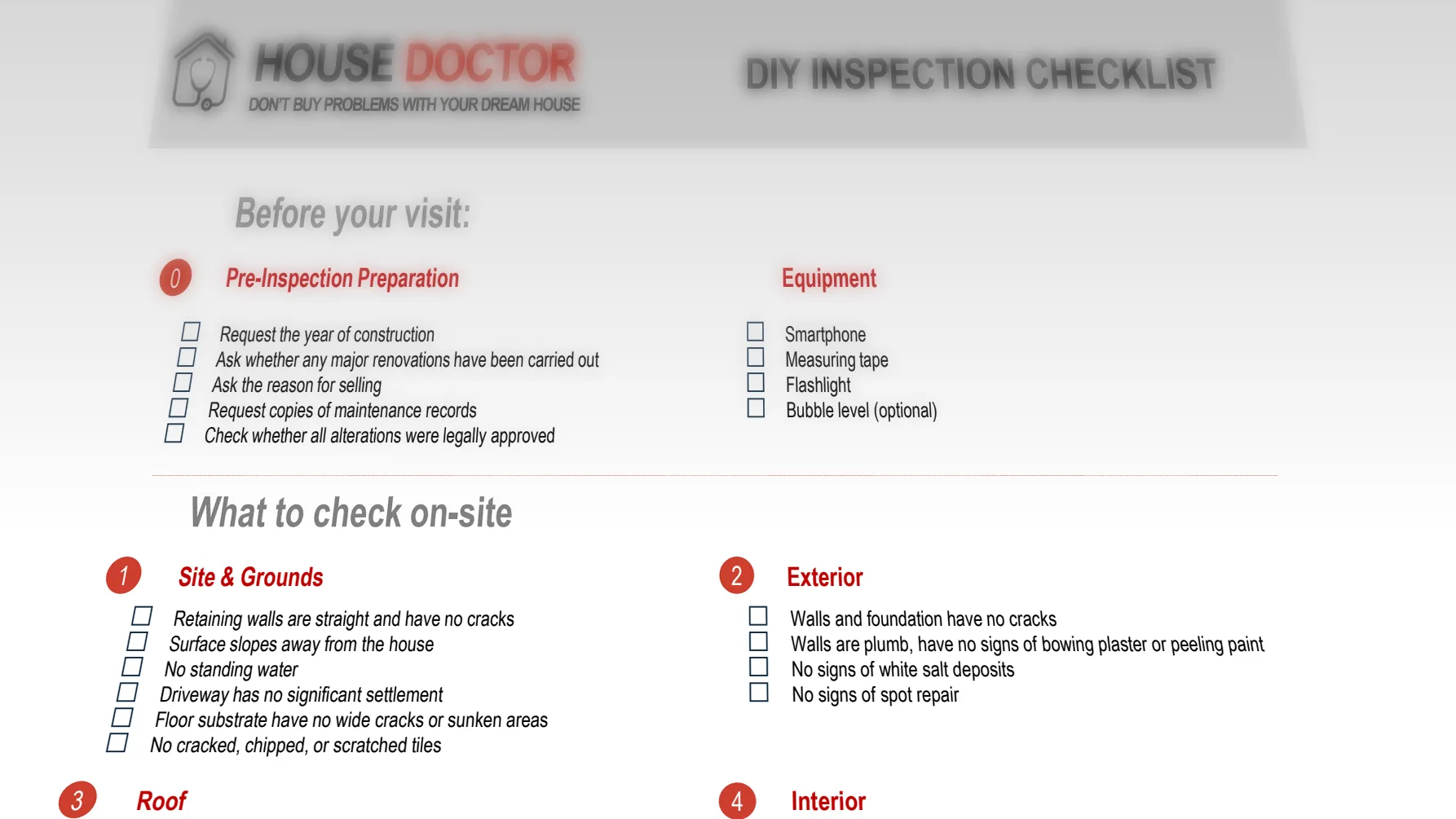
A small investment today can prevent big expenses tomorrow. Before you commit to a property, walk through it with a plan — this checklist covers what to ask the seller before your visit, what to bring, and what to check room by room. It won't replace a full professional inspection, but it will help you catch the obvious problems and know when to call one in.
Before Your Visit
Pre-Inspection Preparation
- ☐ Request the year of construction
- ☐ Ask whether any major renovations have been carried out
- ☐ Ask the reason for selling
- ☐ Request copies of maintenance records
- ☐ Check whether all alterations were legally approved
Equipment
- ☐ Smartphone
- ☐ Measuring tape
- ☐ Flashlight
- ☐ Bubble level (optional)
What to Check On-Site
1. Site & Grounds
- ☐ Retaining walls are straight and have no cracks
- ☐ Surface slopes away from the house
- ☐ No standing water
- ☐ Driveway has no significant settlement
- ☐ Floor substrate has no wide cracks or sunken areas
- ☐ No cracked, chipped, or scratched tiles
2. Exterior
- ☐ Walls and foundation have no cracks
- ☐ Walls are plumb, with no signs of bowing plaster or peeling paint
- ☐ No signs of white salt deposits
- ☐ No signs of spot repair
3. Roof
- ☐ No missing or damaged roof tiles
- ☐ No sagging roof lines
- ☐ No moss or vegetation
- ☐ No water stains beneath eaves
4. Interior
- ☐ No musty smell or strong smell of air fresheners
- ☐ No cracks, mold, or sagging areas
- ☐ Windows and doors open smoothly
- ☐ No visible water damage or water stains
- ☐ Floors are even and make no hollow sound when walking
5. Kitchen
- ☐ Run every tap, see all are OK
- ☐ Check if you can fill a 1-liter bucket in ~6 sec
- ☐ Plug the sink, fill with 5-7 liters to check the seal, drain, and check drainage speed and leaks underneath
- ☐ Turn on the cooking hob and electric kettle to check the electric supply is sufficient
- ☐ Check if the exhaust vent is working
6. Bathrooms
- ☐ Run every tap, see all are OK
- ☐ Check if you can fill a 1-liter bucket in ~6 sec with the shower
- ☐ Plug the bathtub and sink, fill with 20-30 liters to check the seal, drain, and check drainage speed and leaks underneath
- ☐ No mold around wet areas
- ☐ All shut-off valves are OK
- ☐ Toilet fill and flush valves are OK
7. Electrical
- ☐ Connected power capacity is at minimum 5KW for an apartment and 7KW for a house
- ☐ Distribution box looks modern and has at minimum 4+ lines
- ☐ RCD/GFCI is in place and operational
- ☐ No loose or damaged sockets or switches
- ☐ No exposed wiring
8. HVAC
- ☐ Turn on the heating, check all radiators turn warm
- ☐ Turn on mechanical ventilation, check with a paper sheet if airflow is sufficient near vents
- ☐ Turn on the AC, check all units are running
- ☐ Check if the AC capacity is sufficient to reduce room temperature by 2°C in 20 minutes
9. Safety and Security
- ☐ Safe stairs, secure handrails
- ☐ Balcony feels solid
- ☐ Smoke/fire/CO detectors installed
- ☐ Windows and doors are strong against forced entry, windows have security screens
- ☐ Site is secured against water intrusion
10. Swimming Pool
- ☐ Pool bed has no cracks or missing tiles
- ☐ Water level is above inlet nozzles and skimmer box
- ☐ Pump is operating, water flow is visible in the pool
- ☐ Pool water is clean
Red Flags
- Fresh paint covering only one wall or ceiling
- Strong air fresheners masking odors
- Large diagonal cracks inside or outside
- Significant soil settlement, badly damaged retaining walls
- Water stains on ceilings or walls
- Damp smell, signs of mold
- Vivid signs of unrecorded alterations
- Site location prone to flooding or forest fire
None of these automatically means walk away — but each one is worth stopping to investigate before you commit. If a checklist item raises a question you can't answer yourself, that's exactly what an independent technical inspection is for.